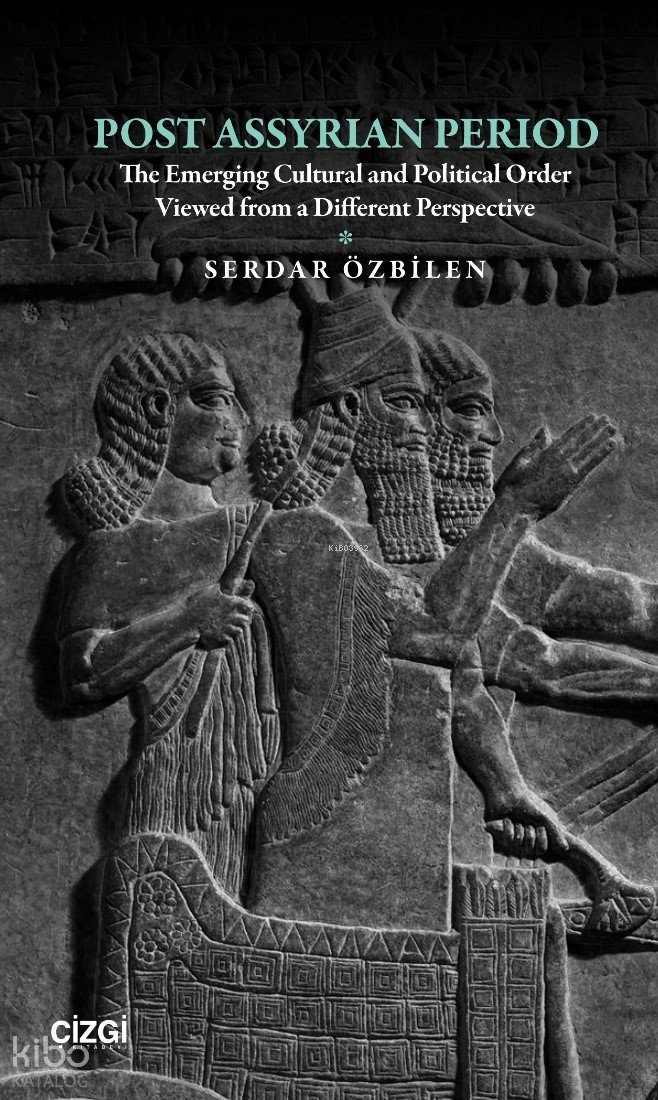
Post Assyrian Period
The collapse of the Neo-Assyrian Empire has long been regarded as one of the most dramatic political ruptures of the ancient Near East. Yet was this collapse truly sudden and absolute, or did older social, cultural, and regional structures continue to survive beneath the ruins of imperial power? Focusing on the Upper Tigris region and the Post-Assyrian period, this book challenges conventional nar...
Devamını OkuKitap Özellikleri
The collapse of the Neo-Assyrian Empire has long been regarded as one of the most dramatic political ruptures of the ancient Near East. Yet was this collapse truly sudden and absolute, or did older social, cultural, and regional structures continue to survive beneath the ruins of imperial power? Focusing on the Upper Tigris region and the Post-Assyrian period, this book challenges conventional narratives centered solely on destruction and political collapse. Through an interdisciplinary approach combining Assyriology, archaeology, historical theory, and cultural memory studies, it explores the complex processes of continuity, adaptation, fragmentation, and transformation that followed the fall of empire. Drawing upon archaeological evidence, cuneiform texts, regional settlement patterns, and broader theories of imperial decline, the study argues that the end of Assyria did not simply produce silence and abandonment. Instead, it gave rise to new local dynamics shaped by longue durée structures, informal networks, and enduring cultural memory. Rather than presenting the fall of Assyria as a single catastrophic event, this work reconsiders imperial collapse as a prolonged and regionally differentiated historical process. In doing so, it offers a new perspective on the relationship between empire, memory, resilience, and survival in the ancient world. Blending theoretical depth with regional analysis, this book will be of interest not only to scholars of Assyriology and Near Eastern archaeology, but also to readers interested in the broader dynamics of imperial transformation and historical continuity.
Bu kitap için henüz yorum bulunmuyor.
Benzer Kitaplar

Akdeniz
Anadolu ve Bağdat Demiryolları
100 Sene 100 Nesne

İtaat Serbest
Delilik Melankoli Cinlenme